
How Yoga Helps Reduce Stress and Anxiety: A Guide for Women
By Shweta Rao, RYT-1000, Doctorate in Yoga Philosophy
Yoga reduces stress and anxiety by moving your nervous system out of fight-or-flight and into rest-and-digest. Slow breathing, gentle movement and deep rest lower heart rate and stress-hormone markers, and clinical trials show real short-term drops in anxiety. It works best practised daily, alongside medical or psychological care, never instead of it.
Key takeaways
- A long, slow exhale is the quickest way to tell your nervous system it is safe.
- Research shows yoga helps people with raised anxiety, most clearly in the short term and with regular practice.
- In the largest trial, yoga helped generalised anxiety, but talking therapy (CBT) helped more people.
- For women, stress often tracks hormones: the week before a period, the postpartum months and perimenopause.
- Fifteen to twenty minutes a day does more than one long class a week.
How does yoga reduce stress and anxiety?
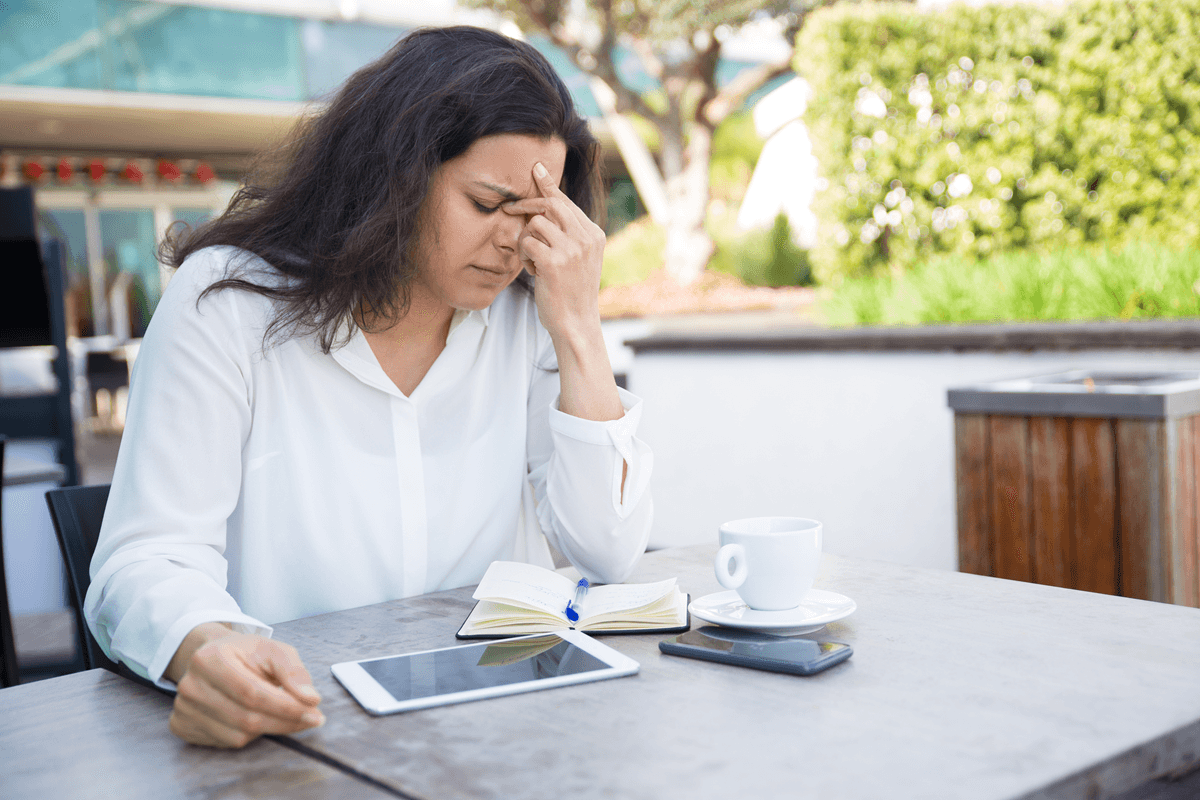
Stress is a body event before it is a thought. When your brain senses pressure, it switches on the sympathetic nervous system: adrenaline and cortisol rise, your heart speeds up, breathing moves into the upper chest, and muscles brace. That response is useful for a deadline. It is exhausting when it never switches off.
Anxiety often shows up first in the body. A tight jaw, shoulders up by your ears, a fluttering stomach, shallow breath, or waking at 3 a.m. with your mind already racing.
Yoga works on this system through three doors at once:
- Breath. Slowing the breath, especially the exhale, activates the parasympathetic (“rest-and-digest”) branch of the nervous system through the vagus nerve. It is the one part of the stress response you can steer directly.
- Movement. Slow, rhythmic movement uses up the muscular readiness that stress creates, then lets it go. Holding a pose while breathing steadily also teaches your system that effort and calm can coexist.
- Rest. Savasana and Yoga Nidra give your body a guided, deliberate experience of deep rest, which many stressed women have not had in years.
The research supports this. A meta-analysis of 42 randomised trials found that practices including yoga postures were associated with lower waking and evening cortisol, lower resting heart rate and lower ambulatory blood pressure than active comparison groups (Pascoe et al., 2017). A separate meta-analysis found small short-term reductions in anxiety in people with raised anxiety levels, though the evidence for diagnosed anxiety disorders was less certain (Cramer et al., 2018).
Early brain-imaging studies also suggest that regular practice may change activity in areas that handle attention and emotion, such as the prefrontal cortex and amygdala. These studies are small, so read them as a promising direction rather than a settled fact.
Is stress showing up as broken sleep, a racing heart or a cycle that has gone off track? Start with a Women’s Health & Movement Assessment: 30 minutes, one-to-one with a practitioner who looks at your history, symptoms and routine before suggesting anything. ₹99 in India or $19 internationally, credited in full against your first month. Book your assessment →
Which yoga is best for stress and anxiety?
The best yoga for stress and anxiety is slow, grounded, and breath-led: gentle Hatha, restorative yoga, and Yoga Nidra. Fast, hot or competitive classes can push an already-wired nervous system further into overdrive.
Match the practice to the kind of stress you feel:
- Wired and racing: start with slow rhythmic movement, then move towards stillness. Lying still straight away can make a busy mind louder.
- Drained and flat: go straight to supported, restorative poses and rest.
These six practices form the core of most stress-relief sequences. Move slowly and breathe through your nose.
- Child’s Pose (Balasana). Knees wide, forehead resting on your fists or a cushion. Breathe into the back of your ribs for 1 to 2 minutes. If your knees complain, place a pillow between your calves and thighs.
- Cat-Cow (Marjaryasana-Bitilasana). On hands and knees, arch on the inhale, round on the exhale, 8 to 10 slow rounds. Let the breath set the pace, not the other way round.
- Downward-Facing Dog (Adho Mukha Svanasana). Five steady breaths. If you have high blood pressure, glaucoma, wrist pain or are in late pregnancy, do it with your hands on a wall instead.
- Legs-Up-the-Wall (Viparita Karani). Lie with your legs resting up a wall and a folded blanket under your hips for 5 to 10 minutes. One of the most effective poses for an evening wind-down.
- Corpse Pose (Savasana). Lie flat, arms away from your sides, palms up, for at least 5 minutes. Rest is the practice, not the end of it.
- Yoga Nidra. A guided 10 to 20-minute body-scan rest, done lying down. Useful on nights when sleep will not come, and for women too depleted for any other practice.
How does breathing reduce anxiety?
Breathing reduces anxiety because each exhale gently slows your heart and each inhale speeds it up. When you make the exhale longer than the inhale, you tip that balance towards calm, and your nervous system follows within a few minutes.
Anxious breathing is usually fast, shallow, and high in the chest. Over-breathing like this can lower carbon dioxide in the blood, which brings tingling, light-headedness and a pounding heart. Those sensations feel like danger, which makes the anxiety worse. Slow belly breathing interrupts that loop.
The NHS recommends a simple version: breathe gently into your belly, in through the nose and out through the mouth, counting to five on each breath, for at least five minutes. Its advice is that the benefit comes from doing it regularly, not only in a crisis.
What is the best breathing exercise for anxiety?
The best first breathing exercise for anxiety is slow belly breathing with a longer exhale. It is safe for almost everyone, works within minutes, and needs no training. Once that feels natural, add Anulom Vilom and Bhramari.
| Technique | How to do it | Best moment | Skip or adapt if |
|---|---|---|---|
| Belly breathing | In for 5, out for 5, into the belly, 5 minutes | Daily habit, morning or evening | Suits almost everyone |
| Long-exhale breath | In for 4, out for 6 to 8 | Before a meeting, a difficult call, or at 3 a.m. | Feeling breathless: shorten both counts |
| Anulom Vilom (Nadi Shodhana) | Alternate nostrils with your right hand, no breath holds, 5 minutes | A scattered, restless mind | Blocked nose: keep to belly breathing |
| Bhramari (humming bee breath) | Inhale through the nose, hum softly on a long exhale, 5 to 7 rounds | Racing thoughts, before sleep | Active ear infection; in pregnancy, keep it soft with no breath holds |
A note on Kapalbhati and Bhastrika. These forceful, rapid breaths are energising, which is exactly what an anxious body does not need. Many women find they leave the heart racing. Skip them while anxiety is high, in pregnancy, during your period, and if you have high blood pressure, a hernia, or recent abdominal surgery.
For evenings when anxiety turns into broken sleep, see Bedtime Yoga for Women Who Wake at 3 a.m.
Why do stress and anxiety feel different for women?
Women’s stress often follows hormonal rhythms, so the same week at work can feel very different depending on where you are in your cycle or your life stage. Noticing the pattern is the first step to working with it.
- The week before your period. Many women notice more worry, irritability, and poorer sleep in the days before bleeding. If it is severe or disrupts your life every month, mention it to your gynaecologist.
- Pregnancy and the postpartum months. Anxiety in this period is common and often missed, because everyone is watching the baby. Your obstetrician should know if worry is constant or intrusive. Read more in Mental Health Benefits of Prenatal Yoga.
- Perimenopause. New anxiety, palpitations or 3 a.m. waking in your late thirties or forties can be an early sign of the transition. Ask your doctor to check palpitations rather than assuming they are stress.
- Thyroid changes. An overactive thyroid can feel very like anxiety. If anxiety has arrived out of nowhere, a blood test is worth asking for.
Yoga can support you through each of these stages, but the sequencing should change with them. That is why a private programme built around your cycle and life stage tends to work better than a one-size-fits-all class.
Is yoga safe during IVF?
Usually yes, with adjustments at each stage and always within your clinic’s instructions.
- During stimulation: your ovaries enlarge, so avoid twists, inversions, jumping, intense core work, and heat. Walking and restorative practice are fine. Stop and call your clinic if you notice severe bloating, abdominal pain, breathlessness, or sudden weight gain.
- After egg retrieval: rest for a day or two, then return to breathing and supported poses as your doctor allows.
- After embryo transfer: follow the two-week-wait guidance above.
Stress and anxiety for Indian women, at home and abroad
Indian women rarely say “I have anxiety”. We say tension, acidity, BP, a headache that will not go, or simply sab theek hai. Many of us were raised to put the household first, so stress shows up in the body long before anyone names it.
Practice has to fit that reality:
- The household rhythm. In a joint family or a busy nuclear one, the only quiet time is often before anyone else wakes or after the kitchen closes. Ten focused minutes at 6 a.m., before your first chai, are worth more than an hour you keep postponing.
- The festive season. Navratri fasting, Diwali hosting, late nights, travel, and sweets all land within a few weeks. Keep practice gentle on fast days, protect your sleep, and treat breathwork as non-negotiable when the house is full.
- The Kapalbhati habit. Rapid, forceful breathing is the most widely taught pranayama in India, and often the first thing a stressed woman reaches for. If you are anxious, start with exhale-led breathing instead.
- Chai on an empty stomach. For some women, strong tea or coffee first thing, with a late breakfast, brings on the shaky, racing feeling that is easy to mistake for anxiety. Notice whether yours does.
If you live abroad, the load is different but just as real. You may be managing a career and children without family nearby, taking late-night calls home across time zones, and carrying quiet guilt about ageing parents. Long, dark winters in the UK or Canada and the isolation of a new city add to it. Many women tell us it helps simply to practise with someone who understands this life, in Hindi or English, at an hour that fits their time zone.
Can yoga replace anxiety medication or therapy?
No. Yoga can support anxiety treatment, but it is not a replacement for medication or psychological therapy. Never stop or reduce a prescribed medicine without talking to the doctor who prescribed it.
The best evidence on this question is a 2021 randomised trial published in JAMA Psychiatry. It followed 226 adults with generalised anxiety disorder for 12 weeks. About 54% improved with yoga, compared with 71% with cognitive behavioural therapy (CBT) and 33% with stress education alone (Simon et al., 2021). The researchers concluded that yoga helps, but CBT should remain the first-line treatment.
So the honest position is this. Yoga is a strong partner to care: it gives you a daily tool, a calmer body and a sense of agency. If you are on medication, keep taking it, and tell your instructor what you take. Some medicines affect heart rate or cause light-headedness when you stand up, which changes how a session should be paced.
How much yoga do you need to feel a difference?
Fifteen to twenty minutes a day is enough to start. Consistency matters more than length: a short daily practice teaches your nervous system a new default faster than one long class a week.
Many women feel calmer after a single session of slow breathing. In our experience, sleep and energy usually begin to shift in weeks three to five, and bigger changes in mood and resilience take around twelve weeks.
A 15-minute evening routine for stress
- Belly breathing, seated: 3 minutes.
- Cat-Cow, 8 rounds, then Child’s Pose: 4 minutes.
- Downward Dog or the wall version: 5 breaths.
- Legs-Up-the-Wall with a long exhale: 5 minutes.
- Bhramari, 5 rounds, then Savasana: 3 minutes or longer.
How much yoga do you need to feel a difference?
What you do off the mat decides how long the calm lasts. These small habits make the biggest difference:
- Consistency. The same time, the same place, even for ten minutes.
- Steady meals. Long gaps followed by sugar can cause energy crashes that feel like anxiety. Simple, regular meals built on dal, vegetables, curd and whole grains, in the spirit of a sattvic diet, keep things steadier.
- Sleep. A fixed wake-up time, screens off before bed, and Yoga Nidra on nights you cannot drift off.
- Self-care rituals. Journaling, a gratitude note, or ten minutes outside in daylight.
- Meditation. Even five minutes of watching the breath builds the habit of noticing stress before it takes over.
More guides on calming the nervous system: Stress, Sleep & Mental Wellbeing.
Frequently Asked Questions
Many people feel calmer after one session of slow breathing, because the effect on heart rate is almost immediate. Lasting change takes longer. With 15 to 20 minutes a day, most women notice better sleep and energy within three to five weeks, and steadier mood and resilience at around twelve weeks. Consistency matters more than session length.
They work best together, which is why most yoga traditions combine them. Movement and breath settle the body first, so the mind has somewhere calm to land. If sitting still makes your thoughts louder, start with gentle movement and breathing, then add five minutes of meditation at the end. If you are already calm in the body, meditation alone may be enough.
Sometimes, yes. Fast or forceful breathing such as Kapalbhati can leave the heart racing. Long stillness with eyes closed can feel unsettling if you have panic attacks or a trauma history, and competitive or hot classes can add pressure. Choose slow, breath-led practice, keep your eyes open if you need to, and stop anything that makes you feel worse.
The best time is the one you can protect every day. Early morning sets a calmer tone for the day and suits busy households. Evening practice helps you wind down and sleep. If evenings are your only window, choose restorative poses, Bhramari and Yoga Nidra rather than strong flows, which can be too stimulating close to bedtime.
Yoga Nidra is a guided body-scan rest done lying down, usually for 10 to 20 minutes. Many women find it one of the easiest ways into deep relaxation, because it asks for nothing except listening. It is especially helpful for sleepless nights and for women too exhausted for movement. If lying still feels uncomfortable, try it seated or with your eyes slightly open.
Read Other Articles
- 10 Easy and Effective Yoga Poses for Beginners
 10 Easy and Effective Yoga Poses for Beginners Book Your Assessment Class Started Your Wellness Journey: 10 Easy and Effective Yoga Poses for Beginners If you’ve never tried yoga before, it’s easy to feel intimidated. You might worry about not being flexible enough,… Read more: 10 Easy and Effective Yoga Poses for Beginners
- Best Online Yoga Classes for Pregnant Ladies
 Yoga Classes for Pregnant Ladies – Prenatal yoga online, trimester by trimester. Compare live classes and spot the safety red flags.
- Beyond Kegels – Smarter Way to Train Your Pelvic Floor
 Beyond Kegels: Discover a smarter way to train your pelvic floor through breath-led yoga and therapeutic movement. Join My Yoga Vibe’s online live classes for women and claim your free demo session today.
About the author
Shweta Rao is the founder of My Yoga Vibe, a women-only online therapeutic yoga studio. She holds RYT-200, RYT-300, RYT-500, and RYT-1000 certifications, is a certified pre- and postnatal yoga coach, and was honoured with a Doctorate in Yoga Philosophy. She has taught women’s therapeutic yoga for ten years, in English and Hindi, and has guided more than 500 women personally across India, the Gulf, Europe and Türkiye.