
Yoga for Stress Relief, breathwork and deep rest calm stress and anxiety in women, what the research says, and safe practices for Indian women at...
Read MoreTHERAPEUTIC YOGA FOR WOMEN · GROUP ·PRIVATE 1-ON-1 · ONLINE
Yoga for Mental Health: Therapeutic Sessions for Women Living with Stress and Anxiety.
When anxiety lives in your chest, your jaw and your 3 a.m. thoughts, talking about it is only half the work. My Yoga Vibe builds a private programme of breathwork, movement and deep rest around your nervous system, your sleep and your hormones — alongside your doctor or therapist, never instead of them.
Can yoga help with
anxiety and stress?
Yes, for many women, as a support alongside medical and psychological care. Systematic reviews of randomised trials show yoga reduces anxiety in people with elevated anxiety, and that yoga-based practice lowers physical stress markers such as cortisol, resting heart rate and blood pressure. The evidence is weaker for diagnosed anxiety disorders and depression, which is why yoga at My Yoga Vibe is designed to work with your treatment, not replace it.
Does this sound like you?
You are not in crisis. You are functioning — working, running a home, showing up. But something has been running too hot for too long.
- You wake at 3 or 4 a.m. and your mind starts the day without you
- Your shoulders, jaw or stomach tighten before you notice you are anxious
- Your mood drops or spikes in the week before your period, and it is getting worse with age
- You are 40-something and the anxiety arrived with irregular cycles, not with any change in your life
- You have PCOS or a thyroid condition and the emotional side was never part of the treatment plan
- You had a baby and the fog, irritability or worry has not lifted
- You are tired of being told to “just relax” or “take a break”
If three or more of these are familiar, a therapeutic programme may help. The assessment is where we find out.
Why stress and anxiety feel different for women?
Women’s mood is shaped by hormonal shifts that men do not go through: the menstrual cycle, pregnancy and the postpartum months, and perimenopause. Conditions common among Indian women, including PCOS and hypothyroidism, are also associated with higher rates of anxiety and low mood.
That does not mean your anxiety is “just hormones”. It means a good programme asks about your cycle, your diagnosis and your medication before it designs a breathing practice. At My Yoga Vibe, that is the first thing the assessment covers — and when something needs a doctor’s eye, our in-house gynaecologist, Dr. Vandana, is part of the team.
Hormone-linked concerns we build programmes around
- PMS and premenstrual mood changes
- Perimenopause and menopause: anxiety, irritability, broken sleep
- PCOS and the anxiety and low mood that often come with it
- Thyroid conditions and the fatigue-and-mood loop
- Postpartum stress and recovery (with your doctor’s clearance)
- Burnout from work, caregiving or both
What research says about yoga for mental health?
- Anxiety. A 2018 meta-analysis of randomised trials found yoga reduced anxiety in people with elevated anxiety levels, with no serious safety concerns. Evidence for diagnosed anxiety disorders was inconclusive. (Cramer et al., 2018)
- Physical stress. A 2017 meta-analysis of 42 trials found practices including yoga postures lowered evening and waking cortisol, resting heart rate and blood pressure compared with active controls. (Pascoe et al., 2017)
- Low mood. A 2013 meta-analysis found moderate evidence of short-term benefit for depressive symptoms, with the authors recommending yoga as an add-on to standard care. (Cramer et al., 2013)
Our reading of this: yoga is a useful, low-risk support for stress, anxiety and sleep. It is not a treatment for clinical depression or an anxiety disorder on its own.
How My Yoga Vibe Uses Yoga For
Anxiety and Stress
Every programme follows the Vibe Method's four pillars, weighted towards the nervous system.
Breathe (The Core)
➔
Slow, extended-exhale breathing and pranayama chosen for how your anxiety shows up — racing, shallow, or held. Practised until you can use it on your own, in a meeting or at 3 a.m.
Move
➔
Gentle, grounding sequences that release the places stress settles: shoulders, hips, jaw, belly. Nothing competitive, nothing that spikes your heart rate when you need the opposite.
Rest
➔
Yoga Nidra and restorative postures in every session. For most anxious women, learning to rest deeply is the hardest and most useful skill.
Track
➔
Your instructor records sleep quality, stress levels, mood and cycle across the month, so you can see change before you feel it.
What happens in your first month
- Assessment (30 minutes). Your history, diagnoses, medication, sleep, cycle and what you want to change. If yoga is not the right first step, we say so and refund you.
- Written plan within 48 hours. Your focus areas, practices and fixed session times.
- Three private sessions a week. Live on video, same instructor every time, at times that suit you.
- Practice notes and WhatsApp support. A short home practice for the days between sessions.
- Monthly review. What has changed, and what we adjust.
Most women notice sleep and calm shifting in weeks three to five. Twelve weeks is the honest timeframe for lasting change, which is why we recommend the three-month programme.
Our Membership Plans
Private 1-on-1 & Group Session is the right answer for a named diagnosis. Many women start there, then move to a group once their practice is established.
Private 1-1 Sessions
Your body. Your goals. Your timeline.
₹10,000/month
- 12 private sessions
- Custom plan, reviewed monthly
- WhatsApp support & practice notes
- Cancel or pause any month
Group Membership
Online Group Session with Personalized Approach.
₹1,999/Month
- Upto 10 members group size
- 12 sessions per month
- Accessibility to groups at different time
About Our Founder
Founded by Shweta, Women Wellness Coach, RYT-1000 and Doctorate in Yoga Philosophy, with extensive experience working with women through different stages of life.
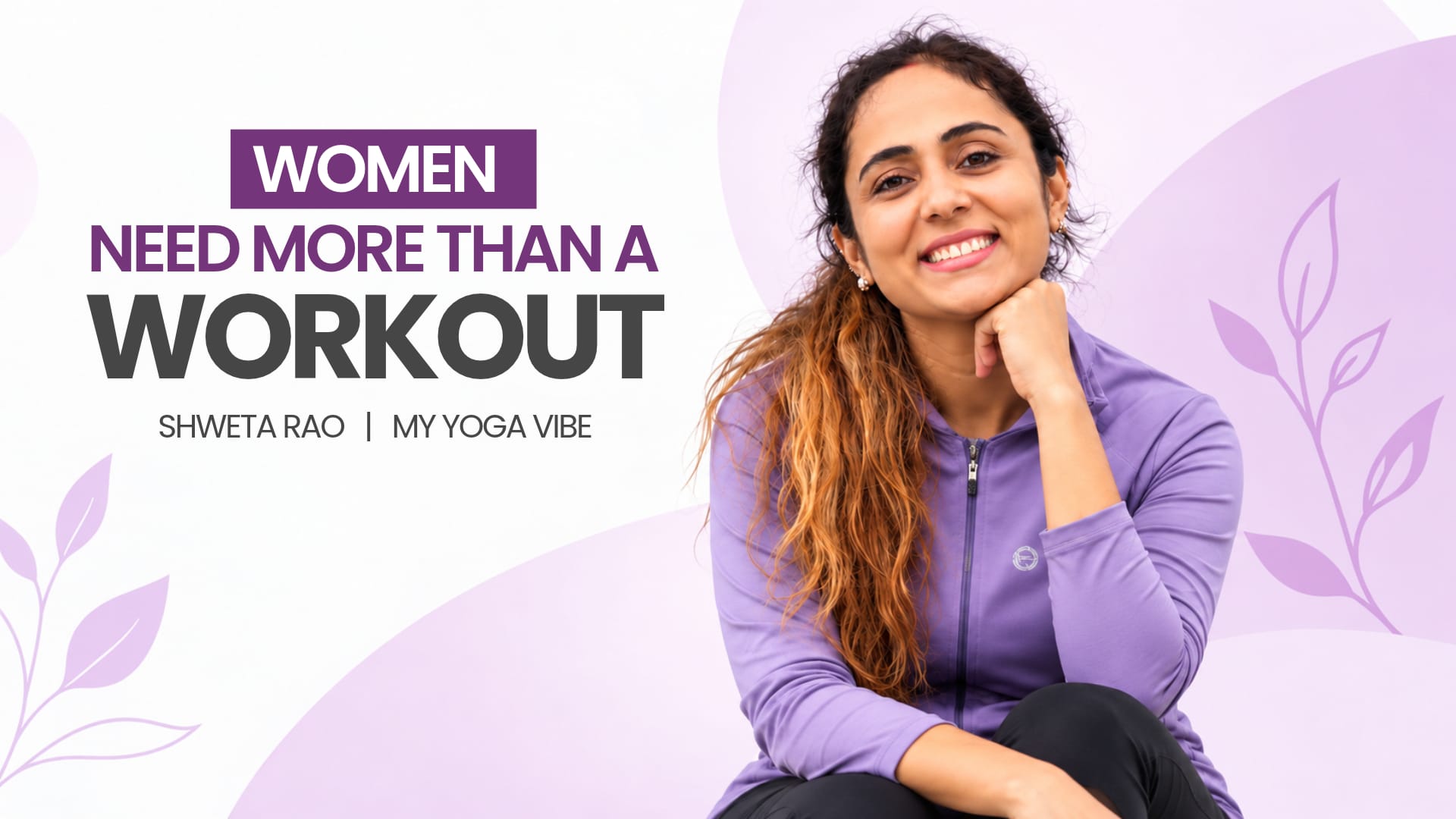
Shweta has spent ten years teaching therapeutic yoga to women with hormonal conditions, and PCOS is one of the most common reasons women come to her. She holds RYT-200, 300, 500 and 1000 certifications, is a certified pre- and postnatal yoga coach with advanced study in female anatomy and physiology, and was awarded a Doctorate in Yoga Philosophy. She has guided more than 500 women personally, in English and Hindi, across India, the Gulf, Europe and Türkiye.
Real Women Real Results
Watch how My Yoga Vibe is changing lives — from PCOS recovery to postpartum healing to renewed energy after menopause. These are not models. These are our members.
Mental Health yoga — frequently asked questions
Read FAQs
Can yoga help with depression?
Yoga can ease mild low mood and is a reasonable add-on to treatment, but it is not a treatment for depression on its own. Research shows short-term benefit for depressive symptoms alongside standard care. If low mood has lasted more than two weeks, please see a doctor or psychologist first.
Which type of yoga is best for anxiety?
Slow, breath-led practice works best for most anxious women: extended-exhale breathing, gentle grounding postures and Yoga Nidra. Fast or heated styles can raise the heart rate and feel worse. At My Yoga Vibe the breathing technique is chosen after the assessment, based on how your anxiety shows up.
How long does yoga take to reduce stress and anxiety?
Most women notice better sleep and a calmer baseline within three to five weeks of practising three times a week. Lasting change in how you respond to stress usually takes around twelve weeks, which is why My Yoga Vibe recommends a three-month programme.
Is online yoga as effective as a studio class for anxiety?
For anxiety, private online sessions often work better than a group studio class. You practise in your own space, your instructor watches only you, and the timing fits your week. Consistency matters more than location, and a fixed private slot is easier to keep.
Can hormones cause anxiety in women?
Hormonal changes can contribute to anxiety and mood swings, particularly before a period, after childbirth and during perimenopause. PCOS and thyroid conditions are also associated with higher rates of anxiety. Your doctor should assess the medical side; yoga can support the nervous system alongside that care.
Can I do yoga if I take medication for anxiety or depression?
Yes. Please continue your medication exactly as prescribed and tell your instructor about it at the assessment. Yoga at My Yoga Vibe is designed to work alongside psychiatric and psychological care, and you should never reduce or stop medication without your doctor’s advice.
Does yoga help with sleep problems?
Yoga Nidra, slow breathing and restorative postures can help many women fall asleep more easily and wake less at night. Sleep is tracked every month on the My Yoga Vibe programme. Persistent insomnia should also be discussed with a doctor, as it can have medical causes.
Is yoga a substitute for therapy?
No. Therapy works on thoughts, patterns and history; yoga works on the body’s stress response, breath and sleep. Many women find the two work well together. If you are already seeing a therapist, it is worth telling them you have started a yoga programme.