

Yoga for Infertility: What It Can and Can’t Do When You’re Trying to Conceive
By Shweta Rao, RYT-1000, Doctorate in Yoga Philosophy
Yoga cannot fix the cause of infertility, and no high-quality study shows it raises pregnancy rates on its own. What it can do is meaningful: trials in women undergoing fertility care show regular yoga lowers stress and anxiety. Practised gently and cycle-aware, alongside your doctor’s plan, it supports sleep, steadiness and the long wait.
Key takeaways
- Yoga supports you through infertility; it does not replace testing or medical care.
- In a randomised trial of 128 women at an IVF clinic, six weeks of yoga lowered fertility-related stress.
- Stress has not been shown to make IVF fail, so you have not “stressed your way” out of a pregnancy.
- Gentle practice three to five times a week suits most women; heat, strong twists, and forceful breathing need care at certain points in your cycle.
- Trying for 12 months without success, or 6 months if you’re 35 or older? See a fertility specialist now rather than waiting on yoga.
Can yoga improve fertility?
Infertility is common. The World Health Organization estimates that about 1 in 6 adults worldwide experience it in their lifetime. It is defined as no pregnancy after 12 months or more of regular unprotected sex, and it can involve the male or the female reproductive system.
Here is the honest picture of the research. Studies on yoga and fertility are small, and most measure how women feel rather than whether they conceive. Those results are encouraging: a randomised controlled trial of 128 women at an IVF clinic found that yoga twice a week for six weeks significantly reduced fertility-related stress compared with a control group. No high-quality study has shown that yoga by itself makes pregnancy more likely.
One finding matters more than any pose. A meta-analysis of 14 studies and 3,583 women found that emotional distress before IVF was not linked to whether the cycle worked. If anyone has told you to “just relax and it will happen”, the evidence says your stress is not the reason. Yoga is worth doing because the months of trying are hard, not because calm is a fertility drug.
There are indirect benefits too. Regular movement supports a healthy weight and insulin sensitivity, which matters if you have PCOS. Breathwork and Yoga Nidra can improve sleep. And a practice you keep three times a week gives you something steady to hold when the calendar feels out of your control.
Not sure where to start? Book a 30-minute Women’s Health & Movement Assessment. We look at your cycle, your reports and your treatment plan, and tell you honestly whether yoga fits right now and what it should look like. ₹99 in India or $19 internationally, credited in full if you join. Book your assessment →
Which yoga is good when trying to conceive?
The best fertility practice is gentle, restorative, and consistent: 25 to 40 minutes, three to five times a week. Skip hot yoga, punishing power classes, and anything that leaves you depleted. Rather than repeating one routine daily, we sequence around your cycle.
| Cycle phase | Approx. days (28-day cycle) | Focus | What to practise |
|---|---|---|---|
| Period | 1 to 5 | Rest | Child’s Pose, Reclining Bound Angle, Bhramari. Skip inversions if uncomfortable |
| Follicular | 6 to 13 | Build | Gentle flows, standing poses, active Bridge, Butterfly, Nadi Shodhana |
| Around ovulation | About 14 | Steady | Your usual practice; nothing new or intense |
| Luteal / two-week wait | 15 to 28 | Soften | Restorative poses, Supported Bridge, Yoga Nidra. No heat, strong twists or Kapalbhati |
These days assume a 28-day cycle with ovulation around day 14. Many women, especially those with PCOS, ovulate later or irregularly, which is why a sequence should follow your own cycle tracking.
What yoga poses help you get pregnant?
No pose makes you pregnant, and be wary of anyone who says otherwise. These five are the ones we use most with women who are trying to conceive. They open the hips, release the lower back, and settle the nervous system without strain.
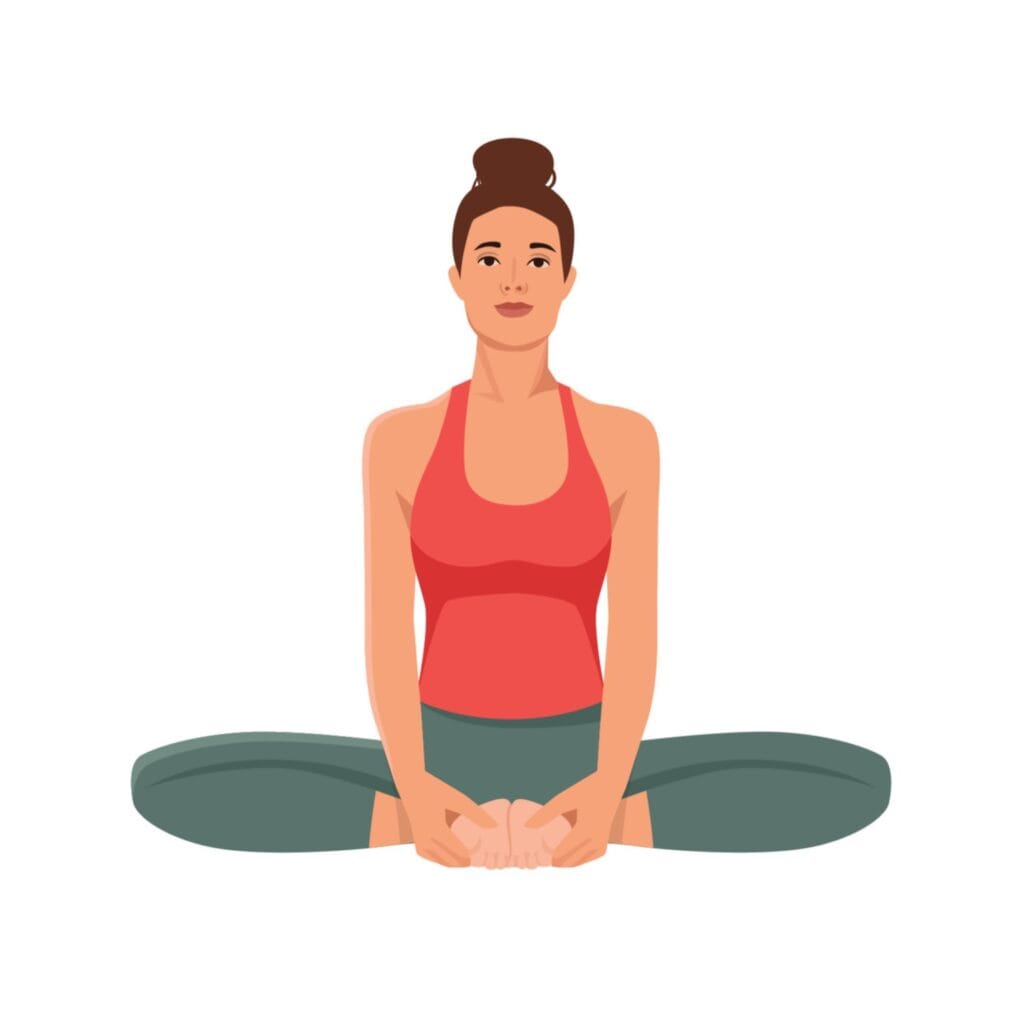
Butterfly Pose (Baddha Konasana)
Sit tall, bring the soles of your feet together, and let your knees fall open. Hold your feet and breathe slowly for 1-2 minutes. Don’t press your knees down; let gravity do the work.
Adapt: sit on a folded blanket and put blocks or cushions under your knees if your hips or groin feel tight.
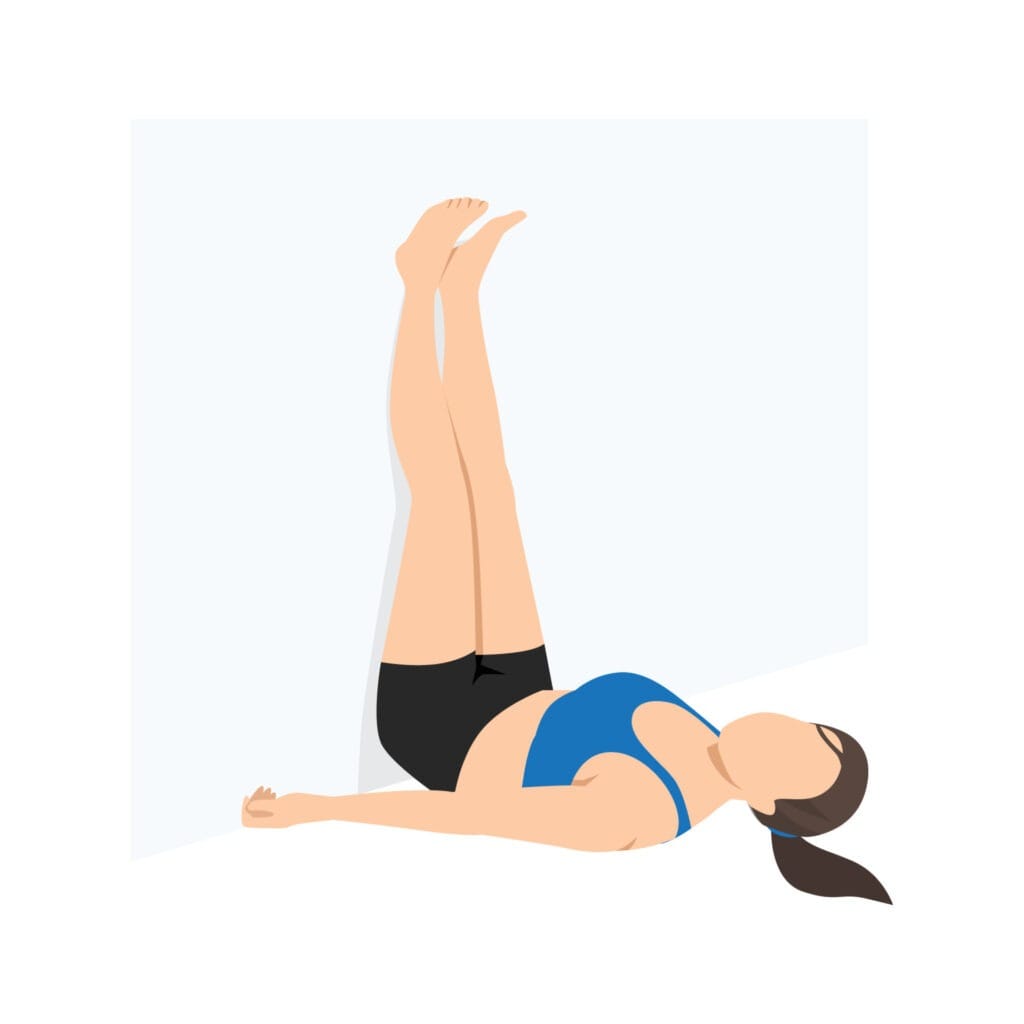
Legs Up the Wall (Viparita Karani)
Lie on your back with your hips close to a wall and your legs resting up it, arms by your sides, palms up. Stay 5 to 10 minutes with slow breathing. It is one of the most reliable ways we know to bring the body out of “alert” mode.
Adapt: place a folded blanket under your hips. Skip it on heavy-flow days if it feels uncomfortable, and if you have glaucoma.
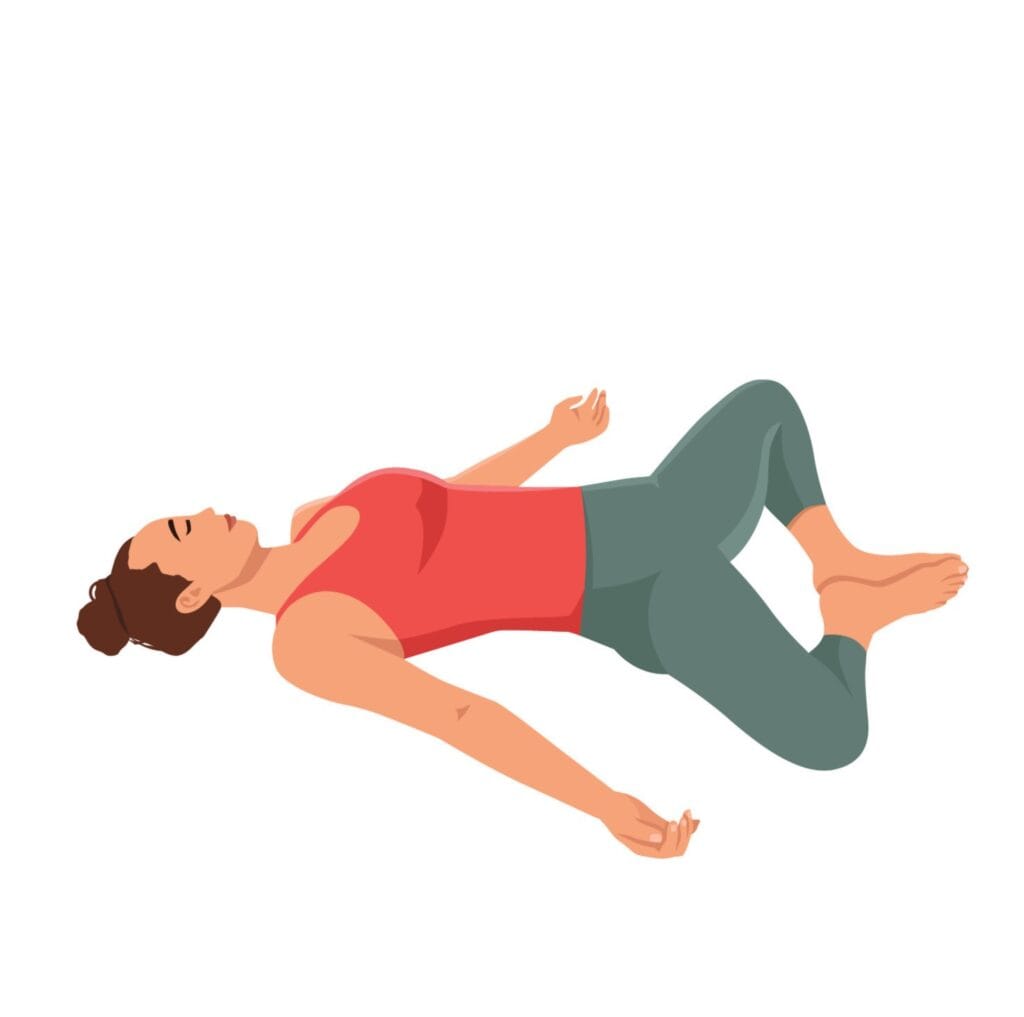
Reclining Bound Angle (Supta Baddha Konasana)
Lie back over a bolster or two firm pillows placed along your spine, soles of the feet together, knees supported by cushions. Rest for 3 to 5 minutes. This is our go-to pose for the two-week wait.
Adapt: raise the bolster higher if you feel any strain in the lower back.

Bridge Pose (Setu Bandhasana)
Lie on your back, knees bent, feet hip-width apart. Press into your feet and lift your hips. In the first half of your cycle, hold an active bridge for 5 slow breaths, 3 rounds. In the second half, slide a block under your sacrum and rest there for 1 to 2 minutes instead.
Adapt: keep your head still and facing up; skip it with a neck injury.
Which breathing practices help with fertility stress?
Breath is where most women feel a difference first. Sit comfortably with your spine tall, before or after your poses.
Nadi Shodhana (alternate nostril breathing). Close your right nostril with your right thumb and inhale through the left. Close the left with your ring finger, release the right and exhale. Inhale right, switch, exhale left: that is one round. Continue gently for 5 minutes. Leave out breath-holding if you have high blood pressure or might be pregnant.
Bhramari (humming bee breath). Inhale through the nose, then exhale slowly while humming with your lips closed. Feel the vibration in your face and head. Repeat 5 to 7 rounds. Many women find it the quickest way to quiet a racing mind before sleep or a clinic appointment.
Should I do yoga during the two-week wait?
Yes, gently. Between ovulation (or embryo transfer) and your test date, practise as though you might be pregnant: restorative poses, Supported Bridge, Reclining Bound Angle, Nadi Shodhana and Bhramari. Leave out hot rooms, deep twists, strong core work, deep backbends and forceful breathing such as Kapalbhati. A 20-minute Yoga Nidra in the evening helps with the particular sleeplessness of those two weeks.
Is yoga safe during IVF?
Usually yes, with adjustments at each stage and always within your clinic’s instructions.
- During stimulation: your ovaries enlarge, so avoid twists, inversions, jumping, intense core work and heat. Walking and restorative practice are fine. Stop and call your clinic if you notice severe bloating, abdominal pain, breathlessness or sudden weight gain.
- After egg retrieval: rest for a day or two, then return to breathing and supported poses as your doctor allows.
- After embryo transfer: follow the two-week-wait guidance above.
What do generic fertility guides miss for Indian women?
Most fertility advice online assumes a Western kitchen, a Western calendar, and in-laws on another continent. Here is what we see in Indian women, in India and abroad.
PCOS is very common. The ICMR’s national study of nearly 10,000 women aged 18 to 40 found that 19.6% met the Rotterdam criteria for PCOS, and most had at least one metabolic condition. PCOS is one of the most common reasons ovulation becomes irregular. If your cycles are long or unpredictable, ask your gynaecologist about [PCOS] early.
The pressure is relentless, and it lands on the woman. The “any good news?” question at every wedding and festival is a real stressor. Infertility can sit with either partner, so both should be tested early; a semen analysis is quick and inexpensive. You do not have to carry this alone.
The Indian plate can work for you. Fertility support doesn’t need imported superfoods. Aim for protein at every meal (dal, rajma, chana, paneer, curd, sprouts, eggs if you eat them) and don’t skip meals to “be good”. Ask your doctor about folic acid, and about checking iron, B12, and vitamin D, which run low in many Indian women. If you keep Navratri, Karva Chauth or weekly fasts, discuss them with your doctor before an IVF cycle.
Routines bend around the family. For many women the only protected time is 6 a.m., before the household wakes, or 20 minutes after dinner. Three short sessions a week that you keep beat a daily plan you abandon.
Trying from abroad adds its own layer. Many women we work with are having fertility care in Dubai, London, Singapore, or the US, or flying home to India for an IVF cycle. Guidance in Hindi or English, on sessions that fit your local clock, makes it easier to stay consistent through all of it.
Which everyday habits support your practice?
- Sleep 7 to 8 hours, at roughly the same time each night.
- Move most days; a brisk walk counts.
- Stop smoking, and keep alcohol to none or very little while trying.
- Keep your weight in a healthy range for you. South Asian women tend to carry metabolic risk at a lower BMI than Western charts assume.
- Keep every appointment. Yoga works best as one part of a plan your doctor leads.
Who should adapt or avoid this practice?
Practise alongside your doctor’s care, never instead of it.
- In an IVF or IUI cycle: your clinic’s instructions come first; then follow the stage guidance above.
- Possibly pregnant or in the two-week wait: no heat, deep twists, strong core work, deep backbends or Kapalbhati.
- High blood pressure, glaucoma or recent eye surgery: skip inversions and breath-holding.
- Fibroids, endometriosis or recent pelvic or abdominal surgery: ask your gynaecologist first, and avoid any pose that causes pain.
- Knee, hip or neck injury: use the props described and skip any pose that hurts.
- Stop and seek medical help for severe pelvic pain, heavy unexpected bleeding, dizziness or breathlessness.
If infertility is weighing on your mood or your relationship, a counsellor experienced in fertility can help alongside your practice.
Frequently Asked Questions
Three to five sessions a week of 25 to 40 minutes is enough for most women. Consistency matters more than intensity: a gentle practice you keep for three months will serve you better than an intense one you drop after three weeks. Match the effort to your cycle, with more active work in the first half and restorative practice after ovulation.
No. Yoga can ease stress, improve sleep and support healthy movement, but it cannot open a blocked tube, change a sperm count or stand in for ovulation medication or IVF. Use it alongside the plan your gynaecologist or fertility specialist recommends, and tell your yoga teacher about any medication or procedure you are having.
Kapalbhati involves forceful abdominal pumping, so we leave it out during IVF stimulation, after egg retrieval or embryo transfer, during the two-week wait, during your period, and if you have high blood pressure. In the first half of a natural cycle a few gentle rounds may suit some women, but ask your doctor first. Nadi Shodhana and Bhramari are calmer alternatives.
We advise against hot yoga while trying to conceive and in early pregnancy, because a raised core temperature is best avoided at that stage. Vigorous power or Ashtanga classes can suit some women in the first half of the cycle. Switch to gentle practice after ovulation, and drop intensity altogether if you feel drained or your cycles become irregular.
Most women notice calmer sleep and a steadier mood within three to five weeks of regular practice. Physical changes, such as easier hips and less back stiffness, take a little longer. Research on yoga and fertility stress has measured six-week programmes. Yoga does not come with a timeline for pregnancy, and no honest teacher will promise one.
Read Other Articles
- Yoga for Stress Relief & Anxiety: A Guide for Women
 Yoga for Stress Relief, breathwork and deep rest calm stress and anxiety in women, what the research says, and safe practices for Indian women at home and abroad.
- Yoga for Infertility Among Women
 Can yoga help with infertility? What the research shows, 5 gentle poses, 2 breath practices and what to avoid, reviewed by a gynaecologist.
- Yoga for Menopause Relief
 Yoga for Menopause – How therapeutic yoga supports hot flashes, sleep, mood, joints and bone health in perimenopause and menopause, alongside your doctor’s care.